

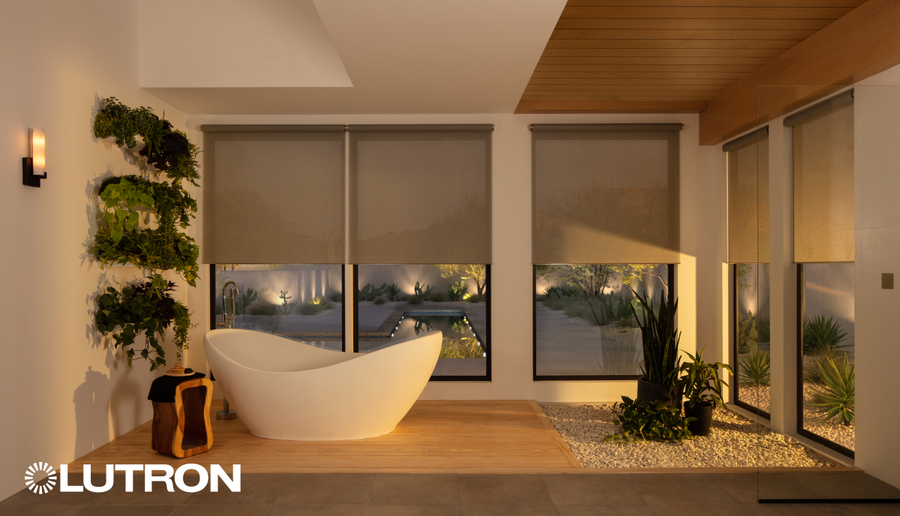

There’s a good chance your shades haven’t changed much since you moved in. Open them up, close them down, repeat. But shades can become one of the smartest parts of a connected home, and for good reason. They can set the mood for movie night, protect your furniture from fading in the afternoon sun, and keep your home more comfortable without you touching a single switch.
That kind of convenience adds up fast, especially once your shades start working alongside your lighting and entertainment systems instead of sitting off on their own. The payoff isn’t just a nicer-looking window. It’s a home that responds to you, automatically. Curious how it all comes together in your own home? Let’s get into it.
SEE ALSO: The Luxury of a Smart Home That Simply Works
Setting the Scene, Automatically
Automated shading really shines when it stops working alone and starts working with everything else in your home. Say it’s movie night. Instead of getting up to close the shades, dim the lights, and turn on the TV separately, one tap (or one voice command) handles all three at once. The room transforms into a theater without you lifting more than a finger.
The same idea applies to dinner parties, quiet mornings, or a lazy Sunday afternoon. Your shades adjust to match the moment, whether that means softening harsh light for a video call or letting in a little extra glow during golden hour. It’s less about controlling a single device and more about setting a mood for the whole room, with shading playing its part alongside lighting and audio.
Shades That Know When to Move
Automated shading doesn’t just follow a schedule. It can respond to the sun itself. Sensors and astronomic clocks track where the sun sits throughout the day, adjusting your shades to cut glare, block heat, or protect your furniture and flooring from sun damage. That means your favorite couch stays protected from fading, and you can actually see your screen during afternoon Zoom calls.
Plus, there’s an energy-saving perk too! Managing how much sun and heat gets into your home can ease the load on your HVAC system, which is good news for both comfort and your energy bill. Best of all, none of this requires you to lift a finger. Your shades handle it in the background, adjusting throughout the day so you don’t have to think about it at all.
One System, Total Control
None of this works without a solid system behind it, and that’s where Lutron comes in. Lutron shading integrates with your existing smart home system, so you can control them along lighting, AV, security, and more through one app or one keypad instead of a handful of separate remotes. Want to raise the shades from your phone while you’re still in bed? Done. Want to set a schedule so they close automatically at sunset? Also done.
Lutron shades move smoothly and quietly, so you get the function without the noisy motor sound you might expect. And because Lutron plugs into the same ecosystem as the rest of your smart home tech, adding shading doesn’t mean adding another app or another remote to keep track of. It just becomes one more piece that works with everything else.
Bring the Whole Room Together
Good shading ties your lighting, entertainment, and comfort into one seamless experience. With Lutron behind it, your windows finally keep up with the rest of your smart home instead of lagging behind. If that sounds like something your space could use, reach out to Sound Decision and find out what automated shading looks like in your own home.